blog

Architecton

A beautiful film that is ultimately let down by not knowing what it wants to be and by trying to explain itself.

Let me start by saying this film is beautiful. Imagery, sound design and soundtrack are stunning. You may feel like I did that there are maybe a few too many drone shots, but they also all are beautiful. It is a film that definitely is worth seeing on the big screen with a good sound system. And yet …

The film starts with a prologue showing buildings in Ukraine destroyed by war. These are haunting images. Blocks of flates, in what we can tell typical utilitarian Soviet architecture style. Ripped open. Floor over floor, missing. Maybe just a meter or so off the wall still there, seemingly almost untouched. An old TV that looks ready to be switched on agaib. A wardrobe, hard to tell if doors are gone or never were there, but clothes ready to be worn again. Yet the shots are devoid of humans as if the places have been abandoned. But there are also buildings untouched, the destroyed or damaged standing in the middle of others that escaped. Arbitrarily chosen, no purpose apart from causing destruction for the sake of terror. Two churches next to each other, one largely destroyed, again the other untouched. Hit by weapons from a country whose leaders themselves like to demonstrate closeness to their church. Their version of a holy war not hesitating to destroy the places of worship of those once close to them, annihilated by those professing a belief in a God who is worshiped in the places they tear apart.

The theme of destruction is repeatedly revisited going forward, yet we are dealing with a different dimension of destruction here. The creation and destruction of what humanity builds, we refer back to it later when we see buildings being torn down en-mass or crumbling due to the passage of time or as a result of forces of nature. But this is ultimately completely different, wilful human destruction for the sake of destruction itself and nothing else.

We move on to images in slow-motion of the aftermath of a blast in a quarry. The blast itself is not shown, we see stone tumbling down, flowing almost like water, slowed down images and sounds, transforming this ultimately violent event into a beautiful ballet of smaller and larger rocks. This accompanied by a beautiful soundtrack. Only later do we really grasp the violence of what is occurring, see substantial pieces of rock tumbling down, ultimately coming to a halt after exerting their impact on their environment. Only later do we see the scars created in the landscape fully which initially seem like elegant tracks. Only later do we see that a whole mountain has been basically exterminated, hollowed out .

This is interspersed with footage of architect Michele De Lucchi building a circle in his idyllic garden, using stones specially selected from a quarry. As we later find out, that circle is meant to mark a space in which humans are not meant to enter after its completion.

In between crumbling stones, there is also footage of a tree being felled. And concrete being poured. 

A blast in the quarry is shown tearing us from the contemplation of the beauty initially shown in the flowing rocks into the violent act of breaking stone from the landscape, and we see the huge scar created in the mountains. 

For me this all is largely a reflection on impermanence, n a way also showing how in that impermanence there can be beauty. To build something new eventually the old has to pass.

So far this is beautifully shown; shots including the drone footage are stunning, sound desin and soundtrack are exquisitely done.

Where ultimately I have an issue is with the film being classed as a documentary and with its epilogue. For me it is so far an essay, then the epilogue starts asking direct questions and making implicit and maybe explicit value statement by the way of those questions. To be fair, the questions are interesting, valid, important, even though I personally find them partly flawed and do not agree with conclusions.

Kossakovsky asks why we build ugly buildings considering that people have always known how to build beautifully. Why do we build only for 40-50 years when the ancients have built for eternity. De Lucchi states that concrete is a dead material and questions why we, actually including himself, build ‘boring’ buildings with it. This all seems to invoke a nostalgia for something that hardly ever existed. Yes, the ancients built for eternity, but only a small amount. The reason Pompei is so valuable is that it is one of few examples of everyday buildings being left. Yes, some temples remain in more or less preserved form. But it is a questionable assumption that there was a substantially different attitude across all that was created. 

The question of what is beautiful is also fraught. Who is defining what is beautiful, by whose standard, using which measure? How long should what we build, what we create last? Certainly not thousands of years. Trying to just preserve what has been done or is being done for what from a human perspective is eternal ultimately will result in stagnation and exterminate creativity, which always requires something to make space if something new is to emerge.

De Lucchi’s view of concrete is similarly flawed. Yes, it is a controversial material. It can be visually displeasing. But is it not down to what architects use it for? Blaming the material seems to be too easy an excuse. 

Lastly is this a documentary? Likely not. There is nothing wrong with it not being one, but I am wondering if by classing it as such we end up with the director feeling such an epilogue is needed. This as well as the director’s statement for me ultimately take something away from the magic of this film. It suddenly tries to come to conclusions as a film where I wish it would allow the viewer the freedom to reflect on what is shown without feeling almost forced int a specific view.

A beautiful film that could be more by being less.

Conclave

A solid film with excellent acting that engages the audience and is perfectly executed.

Rating: 4/5

Let me start saying this is is not going to change the world. We will not find everyone suddenly following the appeal against hate towards the end of the film. Neither will the Catholic Church suddenly transform and unite behind those within or without calling for overcoming plotting, scheming, hunger for power, turning the clock back, even maybe self-definition through stressing differences. Nor will it change anyone’s view of that church, whatever that view might be.

It is neither going to transform cinema. It is not suddenly proposing a new visual paradigm or present a new way of telling a story.

But than that is not what all of cinema has to be about and recent films have shown us how those attempts may fail.

First of all this is great cinema. It is well executed, convincingly acted, beautifully shot, well edited and has a soundtrack intelligently used to great effect.

The story is easily summarised. The pope is dead. The circumstances could be seen as suspicious, but this is not a classic whodunnit. As such, this avenue is not explored further, despite the fact that the last person that saw the Pope, Cardinal Tremblay, was dismissed by the Pope at the last meeting. Going down this route may have taken us closer to the story of the death of John Paul I.

The focus is on the process that follows, in particular the role of the Dean, Cardinal Thomas Lawrence. This character was renamed from the book by Robert Harris (which I admit I had not read), likely to accommodate an English language film. One of the curiosities is the name of Thomas for the Cardinal who battles with doubts in his faith and is representing the rational element in the drama. Cardinal Lawrence is brilliantly played by Ralph Fiennes who clearly brings across the inner struggles of the character in a relatable way.

The two major factions are the liberals, headed by Cardinal Bellini, played by Stanley Tucci. I admit I in general admire the work of both Fiennes and Tucci so may be considered biased but find them, as every one else, excellent. This is also a credit to a director who facilitates these performances.

The other main faction is that of the traditionalists, lead by Cardinal Tedesco. The choice of name, in this case one going back to the novel, is once again interesting. When the book was published, Ratzinger was still alive and having turned from liberal to very conservative early in his career can be seen as representing many of the espoused views of this faction.

The third apparent candidate for the papacy is the afremention Tremblay, standing for the corrupt elements not driven by a conviction either based in liberalism nor traditionalism but that of pure hunger for power, which is to be obtained by whatever means and for no clear purpose other than attainment of that power.

Then there is Cardinal Adeyemi, who is representing Africa, with the outdated extreme views on homosexuality as found in some African nations but otherwise to me not clearly defined views.

Enter Cardinal Benitez, from Latin America, who had been made Cardinal to Kabul, in secret, due to the risk associated with that position. Nobody knew of him but his appointment on inspection is deemed to be genuine.

The ensuing developments shall not be disclosed here to avoid spoilers. Sister Agnes (a wonderful performance by Isabella Rossellini) plays a vital part at one point.

The outcome could have been guessed but for a final twist relating to a trip Switzerland made by Benitez, seemingly with the support from the late Pope.

The whole film is beautifully shot. Some shots are actually not just well executed and beautiful but stunning, like Cardinals filmed from above walking with umbrellas past and around a fountain. Sisters descending stairs. And many more.

The soundtrack is memorable, working in great effect together with the editing.

I do wonder about other aspects of the story to explore but then this is an adaptation of a novel after all and those avenues likely were no options. But what if the Tremblay had a role in the death of the Pope, or if Lawrence had been aware of that final twist earlier on in the story.

All in all an excellent film, one to be enjoyed and appreciated for its superb execution across all areas.

I may appreciate experiments and still not enjoy them if ultimately they fail. And then there are times when you have, let’s say, a relatively simple meal, but every ingredient is perfect and all is perfectly balanced. I’ll definitely go for that.

Gladiator 2

Summary

❤️🏰⚓️⚓️⚓️🪜☠️⚓️🦍🦏☠️⚔️⚓️🏹🦈☠️🐒👂🗡️☠️🩺🏇👍⚔️☠️❤️🌾

👍👍👍

Ok – another summary

A very entertaining and solid movie. You have to ignore a few things and then it is quite enjoyable. Pretty traditional story line and structure but well executed. Solid acting. Matt Lucas was well cast. The title credits were done well. The last shot should not be there and the one before shortened. It’s long but never feels boring.

All in all also a better, actually more subtle (did I just write that) allegory for America today than the other recent “Roman” epic, Megalopolis. And seriously more entertaining. You will likely enjoy it.

The Armada

So the Romans attack the fortified city from the sea with an armada of ships. Big ships. Which must have quite some draught or they capsize (see what happened to the Swedish Vasa). These ships have been fitted to attack fortified sites. That must have involved some serious recce. How did they know the water was deep enough so they don’t get stuck half a mile out in the sea. That would have been a bit of a problem. Let’s just assume that tides are not to extreme. That would be even more interesting. Looked fine at recce but damn should have checked low-tide levels. Sorry General!

The Rhino

Let’s be frank here. You cannot ride a rhino. Nope. Even a champion gladiator. No way. Absolutely not.

But a useful lesson that goes further back in history than I had thought, and true: you cannot outrun a rhino. If you try the result will be more than just painful.

Those Sharks

We all know there are sharks, so this is not really a spoiler. But there are issues around this. Not the least of which is why the hell did they need this whole shark thing? It does not add much to the story, though it is amusing. I was waiting for the soundtrack to make reference to that of Jaws but alas that did not happen. Now …

A sea in the coliseum

How did they make the coliseum leak-proof? I just don’t get it. That must have been quite tricky. They were good at building, well, colossal structures (pun intended), but leak-proof on that scale?

How did they get the water to the coliseum. Yes, they had aqueductshowdoyouspellthesethingsanyway. Kind-of plumbing. But that may require more than what you install to flush bodily waste from the city of Rome.

Ships in the arena

How did they get in there? They seem too large. Unless they had an Ikea kit and assembled them overnight. But you know how long that can take. It can be a great cause for rage though which we learn can be a useful quality.

It’s sharks, not killer trouts

It’s sharks. They need seawater. In absence of industrial scale salination plants, I doubt they just added some teaspoons of salt to water they usually had in Rome. So they needed to get seawater from – yes – wait for it – the sea – and get it to Rome. Rome is not that far from the sea but still it’s a bit of a challenge.

And the sharks came by what transport?

Yes, how did the sharks get to the coliseum? And where are they kept? I assume you want to re-use them and not have them expire after one day of games considering the effort to get them there. And getting them out of the arena must be an unpopular job. Worse than trying to convince the rhino to leave I think.

On the next day

It’s games on consecutive days I think. And the next day the arena is nicely dry as before the sea battle. Well done. I could not stop picturing some poor slave pulling a huge plug to drain the water into the sewers. (remember you still get sharks around).

Medical Procedures.

It seemed at times that repeated attempts were made at experimental tracheotomy. That would explain the preference it seemed for putting a knives into throats. It looks nicely messy as well I admit. But sadly I have to report that no subject survived the procedure and it is good to know that today’s procedures are more subtle.

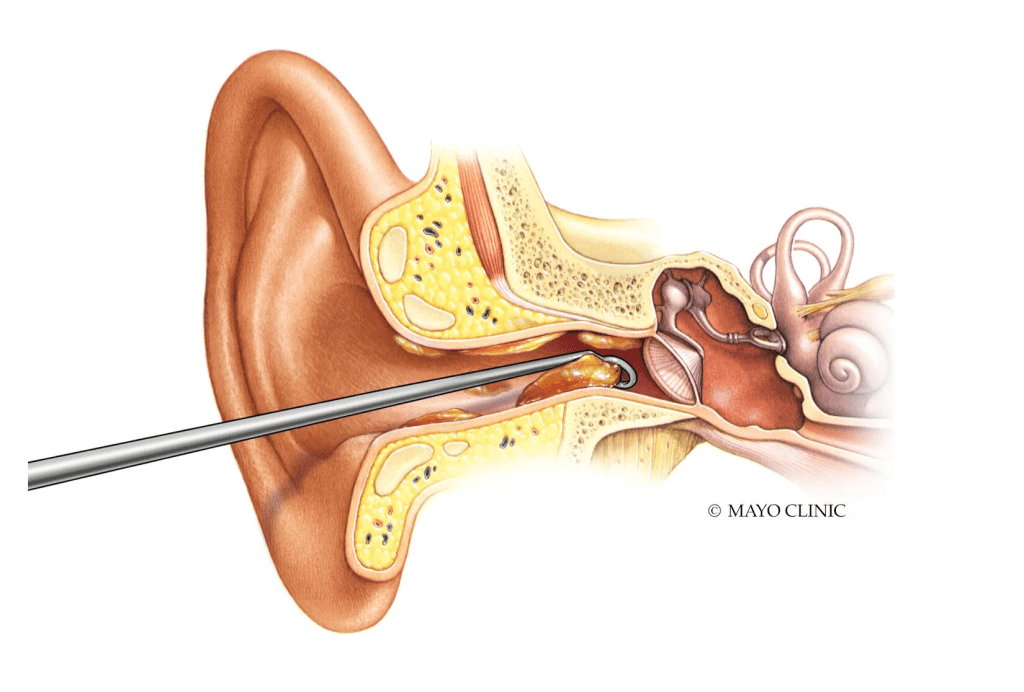
A similar statement can be made about the example of early earwax removal. One crucial point to make is not to go beyond the ear drum, and absolutely definitely not beyond middle- and inner-ear. The subject no longer will worry about earwax I admit.

Star Wars

Seriously, I was waiting for the line “Lucius, I am your (step-)father”

A Final Point

Ah yes, literally. A point is a point. Metal or wood. Keep that in mind.